weeping Willow Graves
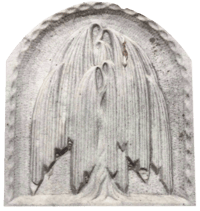 Few gravestone symbols look as mournful at a glance as the weeping willow. With its long, drooping branches and soft, cascading shape, it became one of the most recognizable images of grief in 19th century cemetery art. Rather than pointing to judgment or resurrection as directly as some earlier symbols, the willow speaks in a quieter voice. It suggests sorrow, remembrance, and the lingering presence of loss.
Why the willow appears on gravestones
The weeping willow became popular as memorial art shifted toward gentler and more sentimental imagery in the late 18th and 19th centuries. Its downward-curving branches made it a natural emblem of mourning, and it fit especially well with the emotional tone of Federal, neoclassical, and Victorian gravestones. In both Britain and the United States, it became a familiar way to express grief without needing many words.
What a weeping willow usually means
On a gravestone, the willow usually represents mourning, remembrance, and love that endures after death. It can also carry a secondary sense of resilience, since living willows bend, continue, and return year after year. That combination made it especially effective in cemetery art: visibly sorrowful, but not hopeless.
Willow on its own vs. willow with an urn
Sometimes the willow appears by itself, where it mainly serves as a sign of grief and memory. Just as often, you'll see a willow and urn gravestone symbol, one of the most common mourning combinations of the 18th and 19th centuries. In those cases, the willow adds emotional weight to the scene, while the urn reinforces death, ashes, and memorial remembrance.
The weeping willow became one of the defining trees of mourning art for a reason. It is graceful, unmistakable, and emotionally legible even from a distance. On a gravestone, it tells you that this is a place of loss, but also of memory that has not let go.
Use a Weeping Willow on a Custom Gravestone Prop
A weeping willow can bring an unmistakably 19th century mourning character to a custom gravestone prop. This motif is available as part of our historically inspired design collection and is based on real cemetery references and field scans.