Urn & Willow Graves
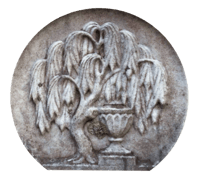
The urn and willow is one of the most familiar mourning motifs in cemetery art. Together, these two symbols usually represent grief, remembrance, and reflection on death.
The urn suggests the body or the remains of the dead, while the weeping willow on a gravestone adds a visual language of sorrow and mourning. This combination became especially popular in the late 18th and 19th centuries, appearing on gravestones across the United States and Britain as memorial art shifted toward a more sentimental style.
What does the urn and willow mean on a gravestone?
On a gravestone, the urn and willow usually symbolize mourning and remembrance. The urn is tied to death, ashes, and classical memorial imagery, while the willow represents grief, lament, and the sorrow of those left behind. Used together, they create one of the clearest visual statements of bereavement in historic cemetery art.
When was the urn and willow popular?
The urn and willow motif became especially widespread from the late 1700s into the 1800s, with strong popularity in the early and mid-19th century. It is commonly associated with Federal, neoclassical, and Victorian-era gravestones, and it appears in both urban and rural cemeteries. In many regions, it became a standard memorial design during the shift away from earlier winged skull and cherub imagery.
Add an Urn and Willow to Your Custom Gravestone Prop
If you would like to include an urn and willow on your own custom gravestone prop, this motif is available as part of our historically inspired design collection. Based on real cemetery motifs and field-scan references, it brings a classic 19th century mourning look to a custom piece.